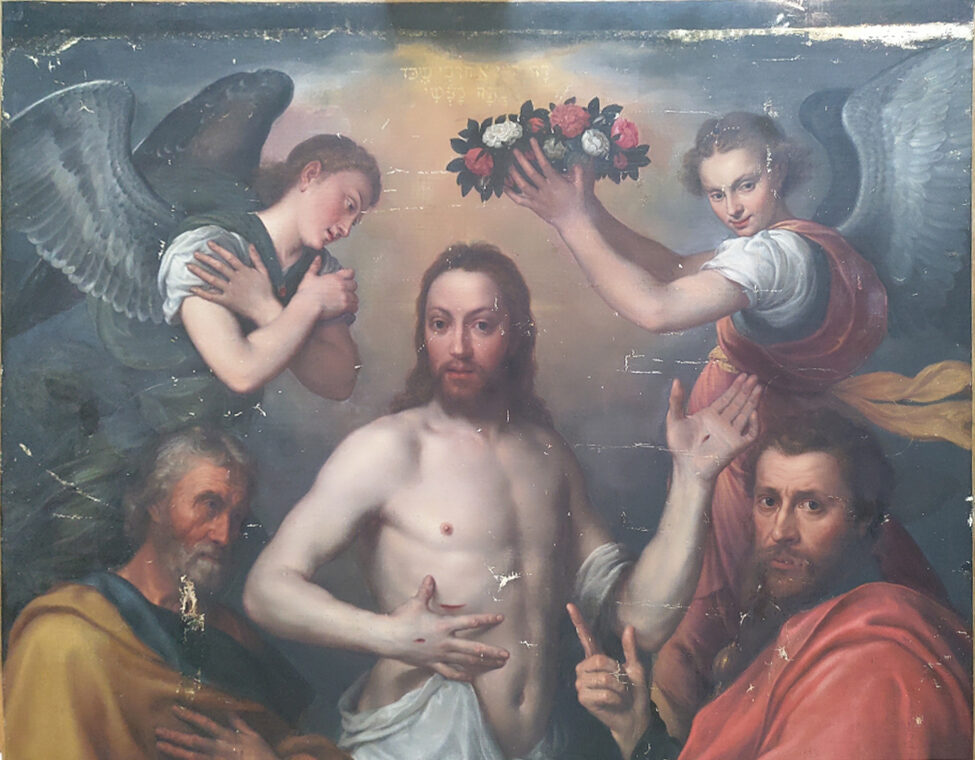
The risen Christ with Saints Peter and Paul and two angels, Oil on canvas. The Phoebus foundation, Antwerp
The restoration of a paitnting usually starts with surface cleaning followed by fixation of fragile paint layers. Sometimes improving of canvas tention is achieved by adjustment of keys at the back of the stretcher. In other cases, a strip-lining is needed to attain the original tention in the canvas.
After varnish removal, the painting is said to be in its “naked state”. This means, that old damage and previous interventions to the painting are now revealed. At this point it becomes clear which further restoration steps are needed.
Anthonis Mor’s painting was no exception, after the varnish removal, one clearly saw an addition to the canvas at the top part of the painting. A large filling run from one end to the other end of the painting. Small lacunes across the whole canvas were also revealed.
The "naked state" of the painting is when old damage and previous interventions to the painting are revealed after surface cleaning and varnish removal.
These damages prompted fillings on the basis of Kaolin and animal skin glue. Prior to this, brittle old fillings were removed. A special tool was applied to improve the texture of the hardened yet stable filling at the top of the painting.
The painting was retouched with Paraloid B72 and pigments and varnished with a few layers of natural resin varnish.
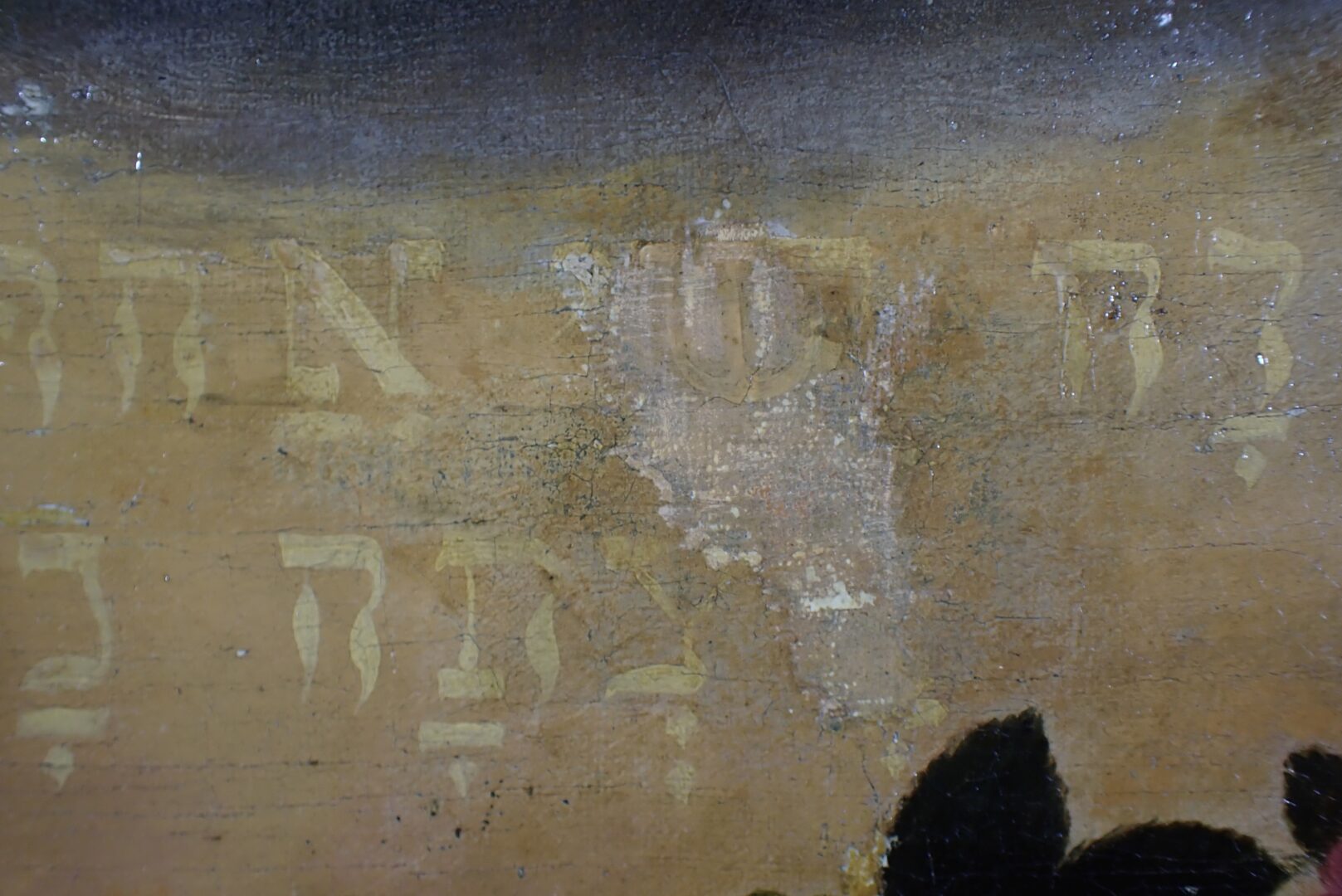
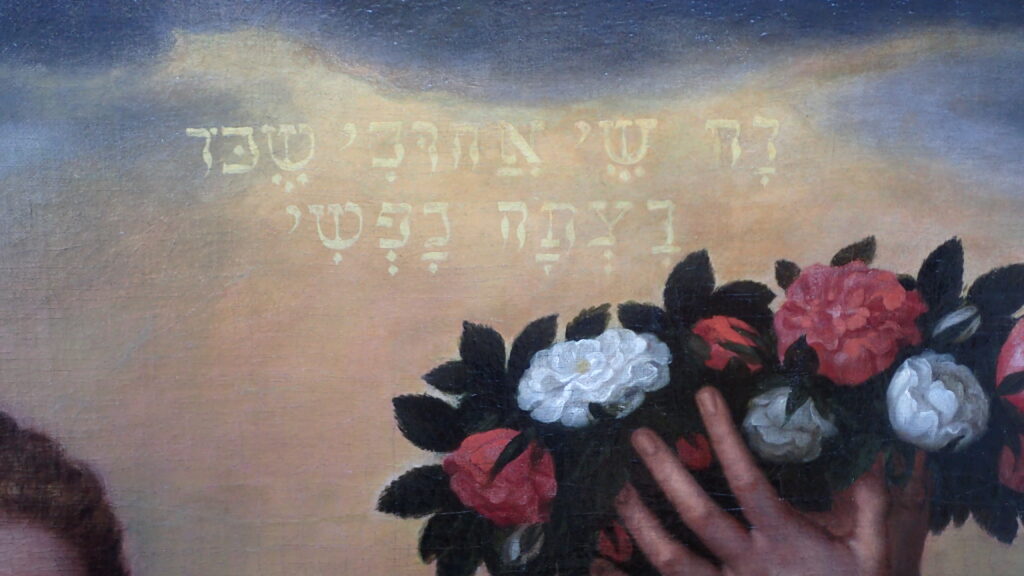
An overpainting was found in the text. On the top line a ‘W’ seemed like an addition and remains of a lost letter on the lower line were revealed. UV analysis showed that the ‘W’ was an overpainting done with a different pigment. The text refers to St.Mathew 17:5, which reads: “This is my beloved Son, in whom I am well pleased”.A professor in ancient Hebrew was contacted to help decipher the text. The actual text on the painting reads in Hebrew:
"This is my beloved, to whom I have given my soul”
Therefore, in the Bible the word “Son” is used instead of “beloved”. According to the professor referring to ‘my beloved’ rather than to my ‘Son’ could have been a historical correction made to reflect a more accurate translation of the original Hebrew text. As in Jewish religion, the concept of the Son of God is not emthasized.
Resulting from the collaboration with the professor, the restoration enabled the text to once again be readable in its original form.