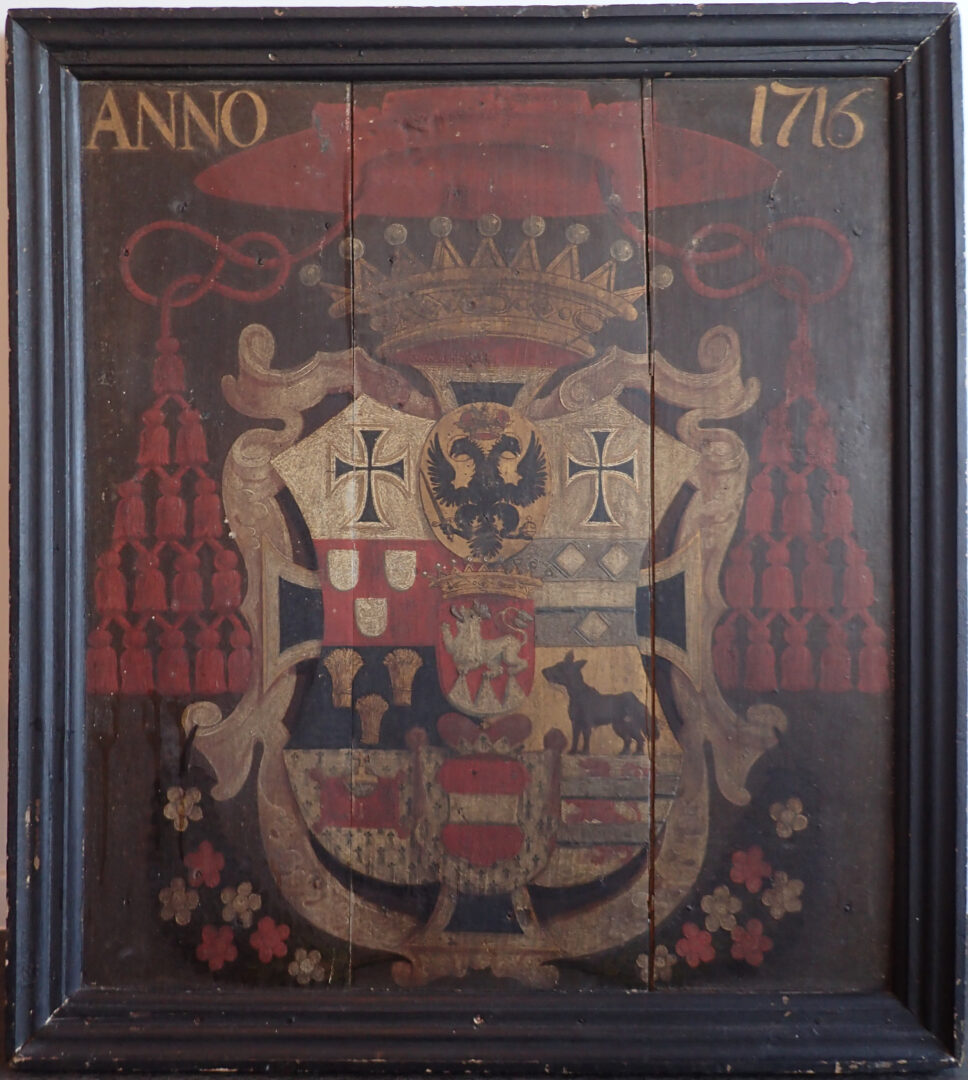
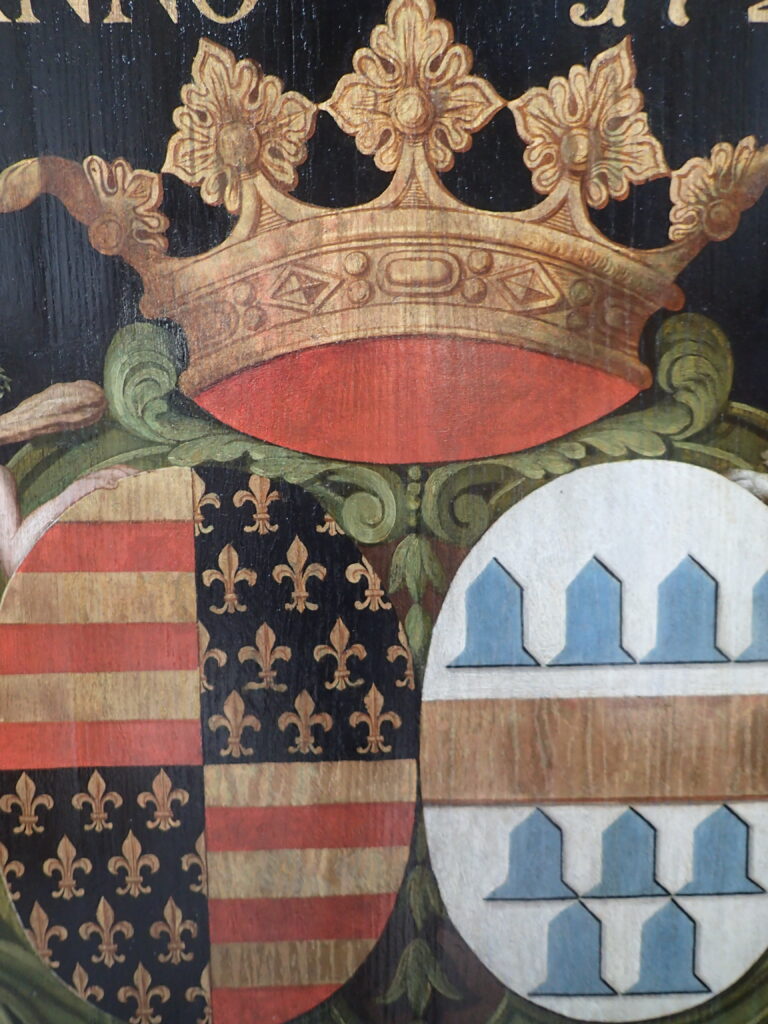
Collection of 11 coat of arms panels of the chamber of rhetorics, city of Bilzen, 17th-18th Century
The first chambers of rhetoric (Rederijkerskamers) are group gatherings that attracted upper class and clergy society to practice poetry and theatre. In Flanders and Brabant the first chambers of rhetoric date back to the 15th century.
The coat of arms panels were created to commemorate the date of the main performances. Each coat of arms refers to the contributor, or the sponsor of the event. The sponsors were often also the members of the rhetoric society for a long period of time.
"Reuck vuldt en verheught":
Sense fulfills and elevates
Motto of the Veldtbloem, CHamber of rhetorics of Bilzen
The 11 panels of the city of Bilzen are a rare example of a series of art works that have been preserved together to this day. The date on each panel prompts historians to keep on searching for the event and a performance connected to it.
The panels were painted by different artists during different periods of time. The condition of the panels was very different. The restoration required to bring the them to the same grade of asthetics, so they could be appreciated together as a series.
.
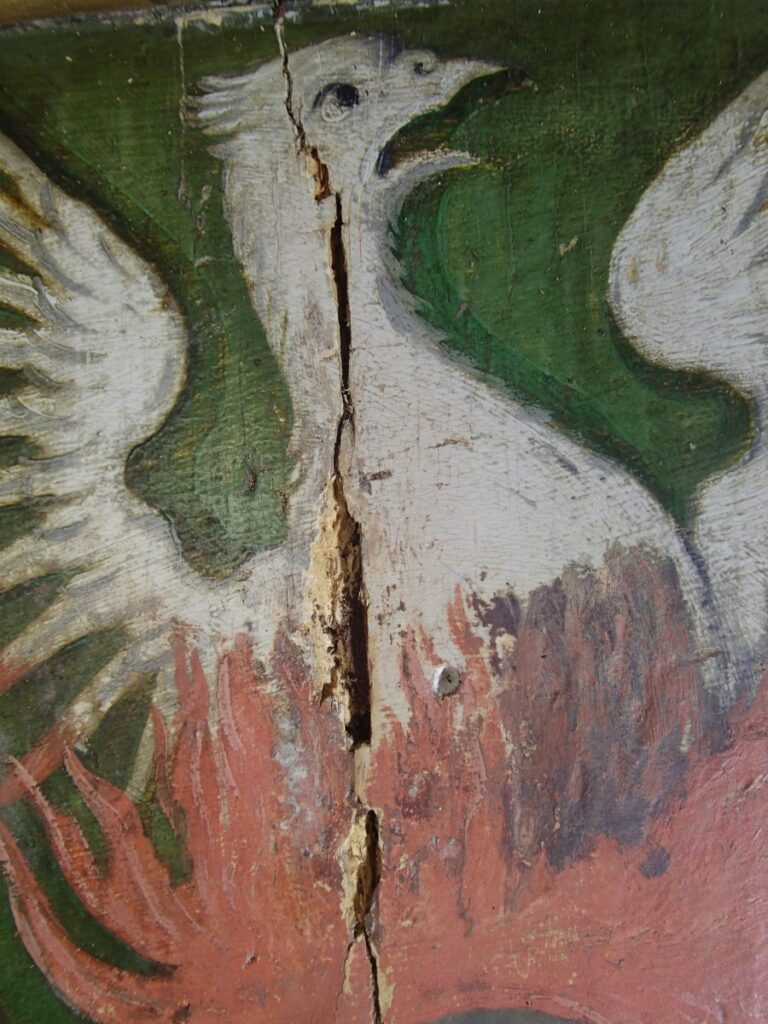
Many of the panels were cracked and had open joints in the wooden support. These panels underwent structural re-enforcement. The losses to the paint layer were severe in one or two cases, requiring extensive fixation and retouching
Eleven panels were all damaged to different degrees and a unique approach to each was required.
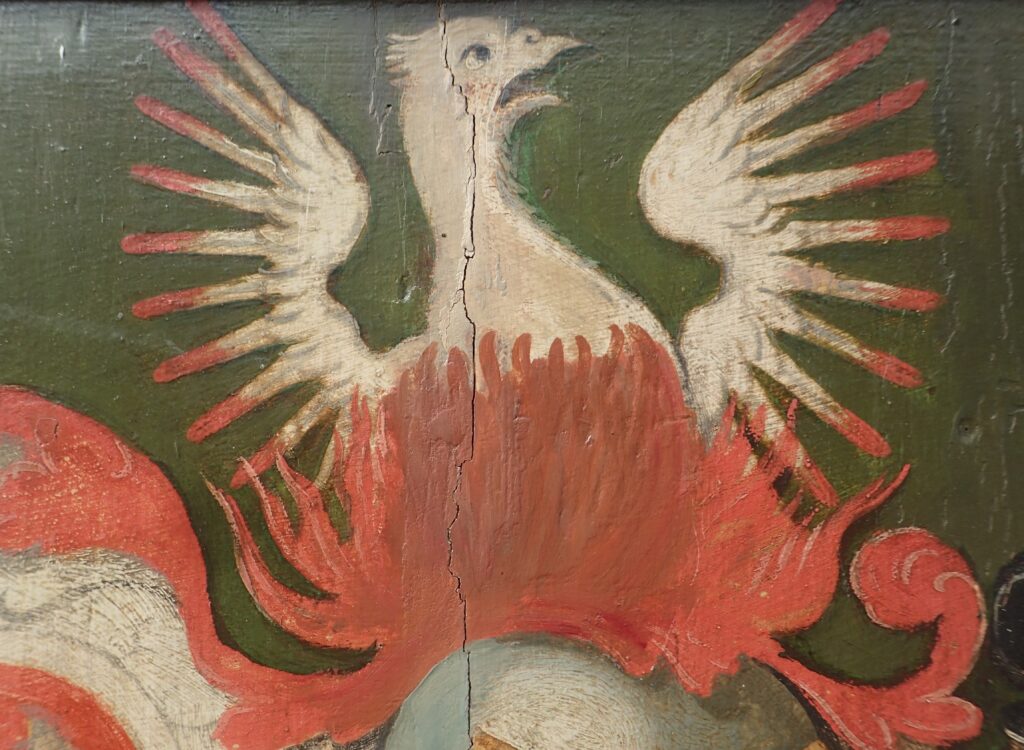
The phoenix was located on one of the open joints of the panel. The joint was in the past restored with a brittle filling and an overpainting done in a free hand over much of the original. The fire of the phoenix was mostly overpained. After the structural restoration, during which the open joints were glued at the back, the front of the panel was treated. The overpainting and the old filler were removed. The new filler was applied only to the crack and the retouch was done in the style of the original painting, using the correct red colour and white for shadows on the fire.